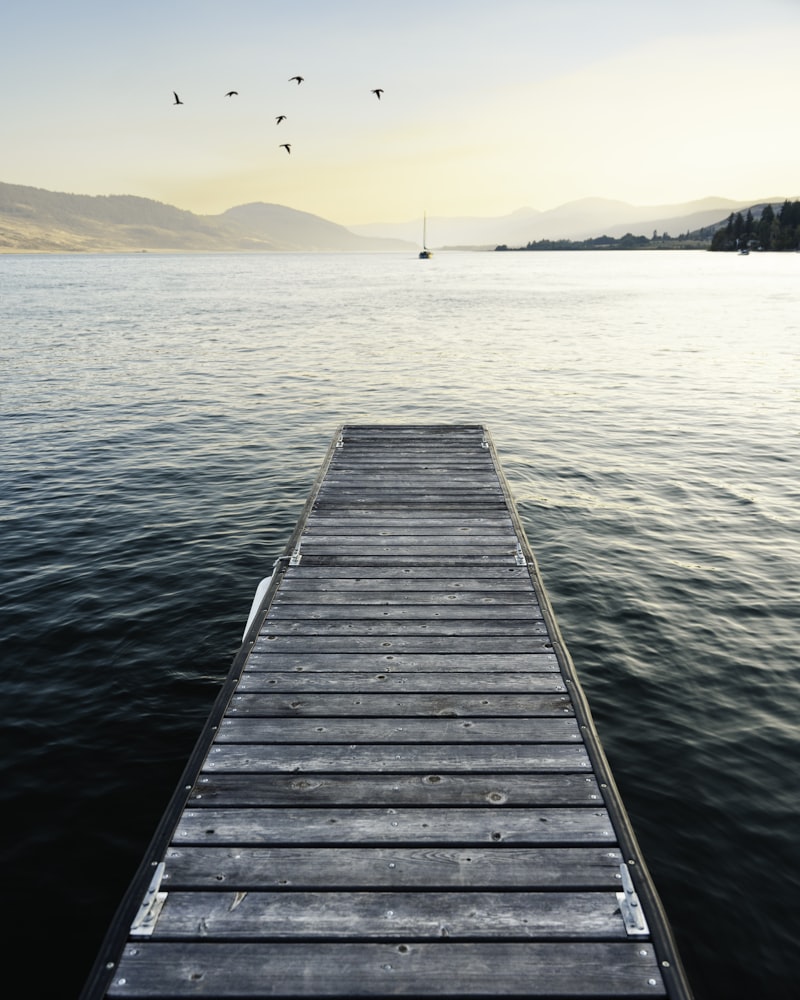
Why Dock Permits Should Be on Every Waterfront Buyer's Radar
Here's something I see all the time: somebody falls in love with a waterfront property on Lake Norman, pictures themselves pulling up to their own dock after work, maybe tying up a pontoon -- and they never once ask about the dock permit situation until they're already under contract.
Browse current waterfront listings by town: Denver NC waterfront homes, Mooresville waterfront homes, Cornelius waterfront homes, and Sherrills Ford waterfront homes.
That can be a very expensive oversight.
I grew up on this lake. Went to Lake Norman High School, spent half my teenage years on the water, and I've been selling waterfront properties here with Titan Realty for years. And I'm telling you -- the dock permitting process on Lake Norman is one of those things that surprises almost every buyer who hasn't dealt with it before. It's not impossible. It's not a reason to avoid waterfront. But you absolutely need to understand how it works before you write an offer.
So let me walk you through the whole thing the way I'd explain it if we were sitting on a dock right now.
Who Actually Controls the Docks on Lake Norman?
This is the first thing people get wrong, so let me clear it up: Duke Energy controls dock approvals on Lake Norman. Not the county. Not the HOA. Not you, even if you own the waterfront lot.
Lake Norman is a man-made reservoir that Duke Energy created in the 1960s for hydroelectric power generation. Duke operates the lake under a federal license from FERC -- the Federal Energy Regulatory Commission. That license gives Duke authority over activities at and below the full-pond elevation of the lake. And that includes anything you want to build on, over, or in the water.
What does that mean practically? It means owning waterfront property on Lake Norman does not automatically give you the right to build a dock, modify an existing dock, or even keep a dock that's already there if it doesn't meet current regulations. Duke has a Shoreline Management Plan that spells out exactly what's allowed and where. Everything starts there.
Key takeaway: Just because you own the land doesn't mean you own the right to build on the water. Duke Energy's Shoreline Management Plan defines what's permissible along every stretch of Lake Norman's shoreline.
Types of Permits You Might Need
This is where it gets layered. A dock on Lake Norman isn't just one permit. Depending on what you're doing, you could be dealing with multiple agencies.
Duke Energy Lake Access Permit
This is the big one. Every dock, pier, boat lift, or shoreline structure needs Duke Energy's approval. Applications go through their electronic system called LAPS -- the Lake Access Permit System. You'll submit your plans online, and Duke's shoreline management team reviews them against their guidelines. This is the permit that determines whether your project moves forward or dies on the drawing board.
County Building Permits
Depending on which county your property falls in -- Iredell, Mecklenburg, Lincoln, or Catawba -- you'll also need local building permits. The counties around the lake each have their own requirements for dock construction. In Mooresville and the Iredell County side, this is pretty straightforward. On the Mecklenburg County side near Cornelius, there can be additional zoning layers. Either way, you need both Duke's blessing and the county's.
NC DEQ (Department of Environmental Quality)
If your project involves work in or near wetlands, impacts water quality, or disturbs the lake bottom in certain ways, the state gets involved. NC DEQ reviews projects that could affect water quality or protected natural resources along the shoreline. This doesn't apply to every dock, but if your property has wetland areas or you're doing anything beyond a standard dock installation, expect this to come up.
Army Corps of Engineers
Dredging, filling, or any significant alteration to the lake bottom may require a Section 404 permit from the U.S. Army Corps of Engineers. This is the federal layer. Most standard dock builds won't trigger this, but if you need to dredge a shallow cove to get your boat in and out, you'll be dealing with the Corps -- and that adds significant time and cost.
The Dock Permit Process, Step by Step
Let me walk you through how this actually plays out when you want to build a new dock or make significant changes to an existing one.
- Review the Shoreline Management Plan. Before you do anything else, check what's allowed on your specific stretch of shoreline. Not all areas are treated equally -- some are designated for residential use, some are conservation zones, and some have specific restrictions based on environmental sensitivity.
- Hire a dock builder or marine contractor. You'll want someone who knows the Lake Norman permitting process inside and out. A good contractor has been through LAPS dozens of times and knows exactly what Duke's reviewers are looking for. They'll survey your shoreline, design the dock to meet specifications, and prepare the application.
- Submit your application through LAPS. Everything goes through Duke Energy's Lake Access Permit System electronically. Your application will include dock dimensions, materials, location relative to property lines and the shoreline, and a site plan showing the proposed structure.
- Duke Energy reviews your application. Standard dock reviews take anywhere from 4 to 12 weeks. That's a wide range, and it depends on the time of year, the complexity of your project, and how backed up their review queue is. Spring and early summer are the busiest times -- everyone wants their dock done before boat season.
- Apply for county permits. Once Duke approves the project, you'll submit for your county building permit. This adds more time -- usually a few additional weeks depending on the county.
- Construction. After all permits are in hand, your contractor can start building. Most standard docks take a few weeks to construct once the green light is given.
Timeline reality check: From initial application to a finished dock, you're looking at 3 to 6 months in most cases. If your project involves state or federal agencies, it can stretch longer. Plan accordingly -- especially if you're buying a waterfront home and want a dock ready for summer.
Have a dock permit question?
Duke Energy’s shoreline rules are confusing. Ask me anything about permits, dock rights, or shoreline classification — I answer these questions every week.
Common Restrictions and Rules You Need to Know
Duke Energy's rules aren't arbitrary -- they're designed to balance residential use with environmental protection and power generation. But some of them catch people off guard.
No Covered or Enclosed Boathouses
This is the one that gets the most pushback. On many lakes in the Southeast, covered boathouses are standard. On Lake Norman, covered or enclosed boathouses are generally restricted or not allowed under Duke's current guidelines. You can have an open dock with a boat lift, but building a roof over it or enclosing it is a different story. If you're coming from a lake where boathouses are everywhere, reset your expectations.
Dock Size and Configuration Limits
Duke has specific guidelines on how far your dock can extend into the water, how wide it can be, and how it's configured relative to your lot lines. You can't just build whatever you want. Setbacks from neighboring property lines are enforced, and oversized docks that impede navigation or encroach on your neighbor's water access will get denied.
Vegetation and Tree Removal
You can't clear-cut your shoreline to improve your view or make room for a dock path. Duke has rules about what vegetation can be removed between your home and the water. There's a defined buffer zone, and removing trees or native plants within it without approval is a violation. I've seen homeowners get fined for this -- it's not something they take lightly.
Existing Non-Conforming Docks
If the home you're buying has a dock that was built under older rules and doesn't meet current standards, that dock may be grandfathered in -- but only to a point. If you want to make significant modifications or rebuild it, the new structure has to comply with current regulations. The old dock's approval doesn't automatically transfer to a rebuilt version.
Shoreline Stabilization and Vegetation Rules
Docks get all the attention, but shoreline management is just as important -- and just as regulated.
Erosion is a real issue on Lake Norman. Lake levels fluctuate because Duke Energy manages water levels for power generation. That rise and fall, combined with boat wakes and weather, eats away at shorelines over time. If your property has an eroding bank, you'll probably want to stabilize it with a seawall, riprap, or natural plantings.
All of these require Duke Energy approval. You can't just dump rocks along your shoreline or pour a concrete wall without going through LAPS. Duke generally prefers natural stabilization methods -- things like native plantings and bioengineered slopes -- over hard structures like vertical seawalls. The type of stabilization they'll approve depends on the severity of your erosion and the classification of your shoreline segment.
For properties in Denver and Sherrills Ford on the western shore, erosion can be particularly aggressive because of the longer wind fetch across the main channel. I always tell buyers on that side of the lake to budget for shoreline work if the current owners haven't addressed it recently.
What to Check Before Buying a Waterfront Home
This is the section I wish every waterfront buyer would read before they start shopping. Knowing these things upfront can save you thousands of dollars and months of frustration.
Existing Dock Permit Status
If the home has a dock, ask for the Duke Energy permit documentation. Is the permit current? Is the dock built to the specifications on the permit? Are there any violations or outstanding issues? I've seen deals where the dock was technically unpermitted or had modifications that were never approved. That becomes your problem as the new owner.
Permit Transferability
Duke Energy dock permits are generally tied to the property, not the owner, so they transfer with the sale. But confirm this -- don't assume. Make sure the permit is in good standing and that the dock matches what's on file. If there are discrepancies, get them resolved before closing.
Shoreline Classification
Check what Duke's Shoreline Management Plan says about your specific lot. Is it classified for residential dock use? Are there conservation restrictions? Some waterfront lots look perfect on the surface but have shoreline classifications that limit what you can build. I've had clients fall in love with a lot in Statesville only to discover the shoreline was in a restricted zone.
Water Depth and Cove Conditions
Not all waterfront is created equal. Some coves get extremely shallow when Duke drops the lake level in late summer and fall. If your cove goes dry or drops to a foot of water, your boat isn't going anywhere. Walk the property at different lake levels if you can, or at least check depth maps. Properties on the main channel or in deeper coves hold their water access year-round.
Neighbor Dock Layouts
How your neighbors' docks are positioned affects what Duke will approve for yours. If the cove is already crowded with docks, there may not be room for another one that meets setback requirements. Drive by the property by boat before you buy, or at least look at aerial photos to see the dock density in your immediate area.
Pro tip: I always recommend my waterfront buyers include a dock permit contingency in their offer. If you're counting on being able to build or modify a dock, make sure you have a way out of the contract if Duke Energy says no. Read more in my Lake Norman Waterfront Buying Guide.
Costs Involved: What to Budget For
Let me give you real numbers so you can plan properly.
Permit Fees
The initial Duke Energy dock permit application runs around $850. That's just for the review and approval -- it doesn't include construction. County building permits add a few hundred more depending on the jurisdiction.
Dock Construction
A basic fixed dock on Lake Norman typically starts around $15,000 to $25,000. Add a boat lift and you're looking at $8,000 to $20,000 on top of that, depending on the lift capacity and type. A floating dock system or a more elaborate configuration with multiple slips, a swim platform, and other features can push the total well past $50,000. Materials, water depth, shoreline conditions, and accessibility all affect the final number.
Annual Maintenance and Fees
Duke Energy charges an annual maintenance fee for dock permits that typically falls in the $500 to $2,000 range depending on the size and type of your structure. Beyond the permit fee, budget for ongoing dock maintenance -- pressure washing, replacing decking boards, maintaining your boat lift, and occasional storm damage repairs. Lake Norman gets some serious thunderstorms in the summer, and docks take a beating.
Shoreline Stabilization
If you need riprap or a seawall, budget $150 to $300 per linear foot depending on the method and severity of the erosion. A typical residential shoreline project might run $10,000 to $40,000. It's not cheap, but it's a lot cheaper than watching your yard slide into the lake over the next decade.
Tips from a Local: What I've Seen Go Wrong
I've been around this lake my whole life, and I've watched enough dock projects to know where things go sideways. Here are the mistakes I see most often.
Buying Without Checking the Permit
I had a client a few years back who bought a beautiful waterfront home in Mooresville with an existing dock. Turned out the previous owner had extended the dock without Duke's approval. My client inherited an unpermitted structure and had to either bring it into compliance or remove the addition. That cost real money and real headaches. Always verify permit status before closing.
Assuming You Can Build Whatever You Want
The guy who wants a two-story covered boathouse with a rooftop deck? I've had that conversation more than once. Duke's going to say no. The rules are the rules, and they apply to everyone -- doesn't matter how much your property cost. Go in with realistic expectations based on what's actually permitted, not what you've seen on lakes in other states.
Waiting Until Spring to Start the Process
If you want a dock ready for summer, you needed to start the permit process in the fall or winter. Spring and early summer are when everyone else submits their applications too, and review times stretch to the longer end of that 4-to-12-week window. I tell all my waterfront buyers to start the dock conversation the day they close -- or sooner.
Ignoring Shoreline Erosion
Erosion doesn't fix itself. I've seen properties where the owner ignored a gradually receding bank for years until the dock access path was undermined and trees started falling toward the water. Addressing erosion early with approved stabilization methods is always cheaper than dealing with a crisis later.
Not Talking to the Neighbors
Your dock project might affect your neighbor's water access, view, or dock usage. Duke's review process considers adjacent property owners, and neighbor objections can complicate your approval. A quick conversation before you submit your application goes a long way. Most of the time, people are reasonable when you give them a heads-up.