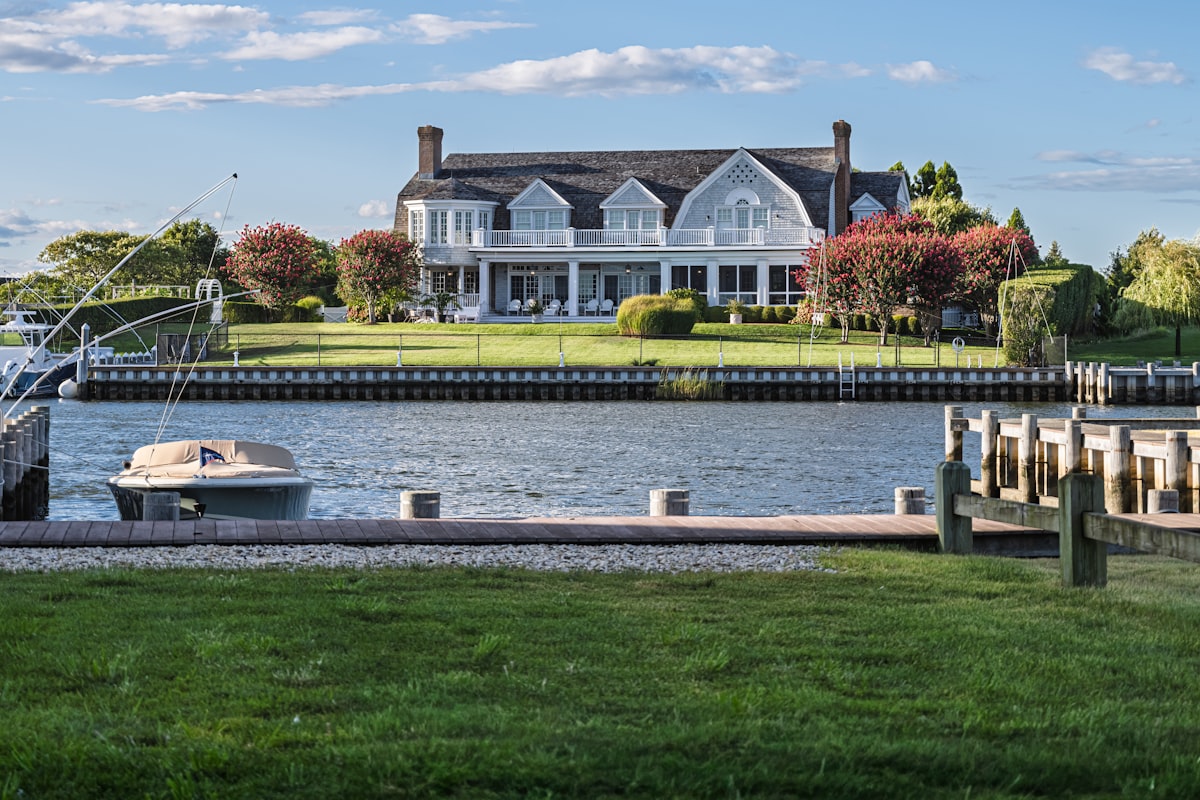
I grew up on this lake. I've fished these coves, jumped off these docks, and watched the sun come up over this water more times than I can count. So when I tell you that buying waterfront on Lake Norman is different from buying a regular house -- I mean it. The lifestyle is incredible. But the process has layers that can trip up even experienced buyers.
Duke Energy owns the shoreline below a certain elevation. Dock permits aren't optional. Flood zones affect your insurance costs. And HOA rules on waterfront properties can be surprisingly strict. I've walked buyers through all of it, and this guide covers the stuff you actually need to understand before you write an offer.
Why Lake Norman Waterfront Is So Desirable
The lake is North Carolina's largest man-made body of freshwater -- 32 miles long, 520 miles of shoreline, spread across four counties. I drive past it every day, and the views still get me. The rolling hills, the coves, the way the light hits the water at 7 AM -- it's genuinely beautiful.
Waterfront homes here let you live what most people only get for a week of vacation. You walk out your back door, step onto your dock, and you're on the water. Fishing before work. Paddleboarding on a weekday evening. Watching your kids swim in the cove while you grill on the deck. That's not an exaggeration -- that's a Tuesday in the summer for my waterfront clients.
But that lifestyle comes with homework. Waterfront ownership means dealing with regulations that don't exist for inland homes. You'll maintain a dock, manage your shoreline, and carry flood insurance. None of it is a dealbreaker, but you need to go in with your eyes open.
Understanding Duke Energy Shoreline Permits and Regulations
This is the part that surprises most buyers. Duke Energy built the dam that created the lake, and they own the land below normal pool elevation -- roughly 760 feet. So when you buy a waterfront home, your property line essentially stops at the waterline. Everything below that is Duke's.
In practice, that means:
- You cannot bulkhead or alter the shoreline without approval. Any modifications to the bank—including erosion control, docks, or landscaping below the normal water line—require a Duke Energy shoreline permit.
- Duke Energy can fluctuate water levels. The lake level typically ranges between 757 and 762 feet. Duke manages these fluctuations for power generation and flood control. Water level changes can reveal mudflats or, conversely, flood lower portions of your yard.
- Your property rights end at normal pool elevation. You can improve and maintain your land down to that line, but the area below belongs to Duke Energy.
- Permits are required for most shoreline work. Installing erosion control, planting vegetation in shallow areas, or building structures near the water requires Duke Energy approval. The good news is that Duke typically approves reasonable residential improvements that don't damage the shoreline.
The permitting process runs about 4-8 weeks. I've helped clients navigate it plenty of times -- it's not difficult, just slow. Plan ahead if you're thinking about dock work or shoreline improvements after you close.
Dock Permits, Boat Slips, and Boat Lift Rules
For most buyers, the dock is the whole reason they're going waterfront. Being able to walk out your back door and onto a boat is the dream. But not every waterfront property can support the dock setup you're imagining, and Duke Energy has a say in what you can build.
Dock Permit Requirements
You need a Duke Energy shoreline permit to install or modify a dock. Their guidelines cover:
- Docks must be single-family residential. Commercial or rental use is prohibited.
- Dock size is limited based on shoreline length. Typically, residential docks cannot exceed 500 square feet, though this varies by location and configuration.
- Docks must be constructed to Duke's specifications—they review design plans and materials.
- Some coves and areas have density restrictions limiting the number of docks per shoreline segment.
- The dock cannot block navigation or create a hazard to other boats.
Boat Slip Regulations
If the home already has boat slips, that's a big plus -- you're inheriting an approved setup. But if you want to add slips, be prepared for a review process. Duke looks at environmental impact, shoreline stability, and whether the new structure would block navigation. I've seen properties in tight coves get denied for additional slips. Check this before you buy, not after.
Boat Lift and Equipment Rules
Boat lifts are generally fine as part of a residential dock, but they need to meet Duke's specs:
- Weight limits and mooring requirements that Duke sets based on your location.
- Height restrictions when the lift is raised -- it can't tower over the dock.
- Extra scrutiny in environmentally sensitive coves or shallow areas.
Jet ski docks are a different story. Some neighborhoods ban them outright. Others allow one PWC dock per property. I've had buyers assume they could park a jet ski at their dock only to find out the HOA or Duke restrictions won't allow it. Always verify before you close.
HOA Restrictions on Waterfront Properties
Duke Energy isn't the only authority you'll deal with. A lot of waterfront communities have HOAs with their own rulebook, and some of them are strict. I always tell buyers to read the covenants cover to cover during due diligence -- not skim them, read them.
The restrictions I see most often:
- Dock specifications: Your dock might need to match the neighborhood's aesthetic -- specific materials, colors, even the style of railings.
- Boat and watercraft limitations: Some communities cap boat length or restrict the number of watercraft per property. If you've got a 24-foot pontoon and a jet ski, make sure both are allowed.
- Water activity rules: Quiet hours for jet skis, wake boat restrictions near shore, noise limits after certain hours. These vary widely by neighborhood.
- Shoreline maintenance standards: You may be required to keep your visible shoreline landscaped and erosion-controlled to community standards.
- Rental restrictions: Short-term rentals like Airbnb are banned in many waterfront communities. Even long-term rental rules can be restrictive.
- Lighting and signage: Dock lighting rules, buoy placement, even flags or signs visible from the water can be regulated.
Get the full HOA packet during your due diligence period. Ask the seller directly about any disputes, violations, or rule changes under discussion. And pay attention to HOA fees -- waterfront communities often charge more because they're maintaining common shoreline areas and community dock facilities.
Flood Zones and Flood Insurance
Flood risk is real on the lake. Not catastrophic, not constant, but real. And it affects your insurance costs, your mortgage requirements, and eventually your resale value. Don't skip over this section.
Flood Zone Mapping
FEMA maps assign risk categories to properties. Most waterfront homes here fall into one of two buckets:
- A or AE zones (high risk): These have a 1% annual flood chance. If you've got a mortgage, flood insurance is mandatory. Period.
- X zones (lower risk): Technically outside the 100-year floodplain, but that doesn't mean you're safe from water. Localized flooding still happens.
I always tell buyers to talk to the neighbors. Seriously. Knock on the door next to the house you're considering and ask, "Has water ever reached that yard?" Long-time residents know things the flood maps don't capture. Duke Energy manages lake levels for power generation, and heavy rain events can push water higher than you'd expect. The 2019 and 2023 events taught a lot of homeowners that lesson.
Flood Insurance Costs
Budget $800 to $3,000+ per year for flood insurance on a waterfront property. It depends on your elevation relative to the base flood level. Homes with basements or finished lower levels near the water pay more. And these premiums tend to go up over time, not down. Build this into your monthly budget from the start.
Some neighborhoods are working with FEMA on remapping efforts that could lower flood designations. I keep track of which areas have those applications pending. It's worth asking about -- a reclassification can save you thousands over the life of ownership.
Found a waterfront home you like?
I’ll check the dock permit, shoreline classification, and HOA restrictions before you make an offer — free, no strings. It’s a 10-minute call that can save you a six-figure mistake.
Types of Waterfront Properties on Lake Norman
Not all waterfront is the same. Where you sit on the lake -- main channel versus cove, deep water versus shallow -- changes the price, the lifestyle, and the maintenance. Here's how I break it down for my buyers.
Main Channel Properties
Main channel means you're on the open water. Big views, deep water, and direct access to the full lake. These are the premium spots:
- Highest prices because the views and boating access are unmatched.
- Deeper water means you can dock larger boats without depth issues.
- More wave action from boat traffic, which means more shoreline erosion over time.
- Weekends get loud. Ski boats, pontoons, jet skis -- the main channel is the highway of the lake on a Saturday in July.
Cove Properties
Coves are the quieter, more protected areas off the main channel. A lot of families actually prefer these:
- Calmer water makes for safer swimming and easier dock maintenance.
- Usually more affordable than main channel properties with similar home size.
- Less boat traffic and a more peaceful daily feel.
- But some coves are shallow. If you've got a 22-foot ski boat, make sure you can actually get it in and out of your slip at low water levels.
Pier or Dock Access Properties
Some homes sit on the water but use shared community docks or piers instead of a private setup:
- You don't maintain the dock yourself, which saves money and hassle.
- Shared access means rules about when and how you use it.
- Lower price point than homes with private docks -- a way to get waterfront without the full premium.
Waterfront Without Direct Dock Ability
Some shoreline properties sit on stretches where Duke Energy won't permit a dock -- the water's too shallow, the shoreline is environmentally sensitive, or there are other restrictions. You get the views and the proximity, but no boat at your doorstep:
- Significantly cheaper than dock-capable waterfront.
- Great option if you want the lake views for your morning coffee but aren't a serious boater.
- Still in the flood zone, so flood insurance is still part of the equation.
Price Ranges and What to Expect
Waterfront pricing on the lake covers a wide range. I'll give you the real numbers as of 2026:
- Waterfront without dock capability: $400,000-$650,000 for a solid 3-4 bedroom home. You're paying for views and water proximity.
- Waterfront with dock access: $600,000-$1,000,000+. The dock is where the premium kicks in.
- Premium main channel properties: $1,000,000-$2,500,000+. Big homes, deep water, wide-open views, high-end finishes.
- Lakefront lots and teardowns: $200,000-$600,000. You're buying the land and the water access, then building or rebuilding.
Where on the lake matters a lot. Gated communities like The Peninsula or Langtree sit at the top of the market. Mooresville and Statesville waterfront generally offers more house for the money. Denver and Sherrills Ford on the west side give you legitimate waterfront at prices that would be impossible on the Mecklenburg County side.
And don't forget the ongoing costs that come with the territory:
- Dock maintenance and repairs: $500-$2,000 per year.
- Shoreline upkeep and erosion control: $300-$1,500 per year.
- Flood insurance: $800-$3,000+ per year.
- HOA fees (waterfront communities run higher): $200-$600+ per month.
- Boat docking fees if not included in your HOA: $2,000-$6,000+ per year depending on boat size.
Tips for Waterfront Home Inspections
A regular home inspection won't cut it here. You need someone who knows what to look for on a lake property -- and that includes things happening below the waterline.
Hire a Waterfront-Experienced Inspector
I have inspectors I recommend specifically for waterfront deals. You want someone who can evaluate:
- Dock condition -- how much life is left in it and what repairs are coming.
- Shoreline erosion -- is the bank stable or slowly crumbling into the lake?
- Water intrusion -- any history of flooding, moisture in the basement, or drainage problems.
- Foundation issues tied to proximity to the water.
Assess the Dock and Shoreline
The dock inspection is its own event. A good inspector will check:
- Decking for rot, warping, or loose boards.
- Pilings below the waterline -- this sometimes requires a diver or underwater camera. Pilings can look fine above water and be deteriorating below.
- Rails, cleats, and lights for safety and function.
- Lift condition if there's one installed.
- Whether all dock work has proper Duke Energy permits on file.
Shoreline problems are expensive. I'm talking $10,000 to $50,000+ for serious erosion remediation. If you see crumbling banks, exposed roots, or signs of seepage, flag it immediately and get estimates before you proceed.
Review Flood History
Ask the seller directly: has water ever entered this home? When? How high? Don't just rely on their disclosure form -- request utility bills from the last few years (unusually high water usage can signal hidden moisture problems). Pull the FEMA flood maps and ask specifically about the 2019 and 2023 high-water events that affected multiple parts of the lake.
Verify Permits and Compliance
Get copies of every Duke Energy shoreline permit associated with the property. Confirm the dock, any seawall, and any shoreline modifications were done with proper approval. Unpermitted structures aren't just a regulatory headache -- they can become your financial problem if Duke requires you to remove them after closing.
Test Well and Septic Systems
A lot of waterfront homes, especially on the west side and north end, run on well water and septic. Both need inspection and testing. Septic systems near the lake get extra scrutiny because of contamination risk. Some properties are being connected to municipal water and sewer as infrastructure expands -- ask whether that's planned and what the connection fees look like.
Why You Need a Local Waterfront Agent
I won't sugarcoat this -- you shouldn't try to buy waterfront on this lake without someone who knows it inside and out. The stakes are too high and the details too specific. Here's what I bring to the table that a generic agent can't:
- Duke Energy knowledge: I've been through the permitting process with clients dozens of times. I can tell you before you make an offer whether a dock expansion is realistic or a dead end.
- HOA insight: I know which communities have well-run boards and which ones are in the middle of contentious rule changes. That matters more than people think.
- Flood risk awareness: I can show you which coves got hit in the 2019 and 2023 high-water events and which properties stayed dry. That's not on Zillow.
- Shoreline and dock assessment: After years of showing waterfront, I can spot a dock that's three years from needing $20K in work. That factors into what you should offer.
- Market context: Waterfront comps are tricky because every property's water access is different. I pull detailed comparisons that account for frontage, depth, dock quality, and view type -- not just square footage.
- Inspector network: I have trusted inspectors, dock specialists, and marine contractors I can connect you with who know this lake specifically.
I grew up swimming off these docks. I know which coves get weedy in August, which neighborhoods have the best sunset views, and which stretches of shoreline are rock-solid versus slowly eroding. You're making a major purchase -- have someone in your corner who actually knows this water.
The Bottom Line
Waterfront living on the lake is everything people say it is. But going in uninformed about Duke Energy permits, flood zones, dock maintenance, and HOA rules can turn a dream purchase into an expensive headache. Do the homework, ask the right questions, and work with someone who's done this before.
Next Steps: Get Expert Guidance
If you're serious about waterfront, let's talk. I'll walk you through what's currently on the market, explain the differences between the areas of the lake, and help you figure out what kind of waterfront property actually matches your lifestyle and your budget.
Call me, text me, or send an email. No obligation -- just a straight conversation about what buying waterfront here actually looks like.